When you’re thinking about getting help for your mental health, knowing your options matters.
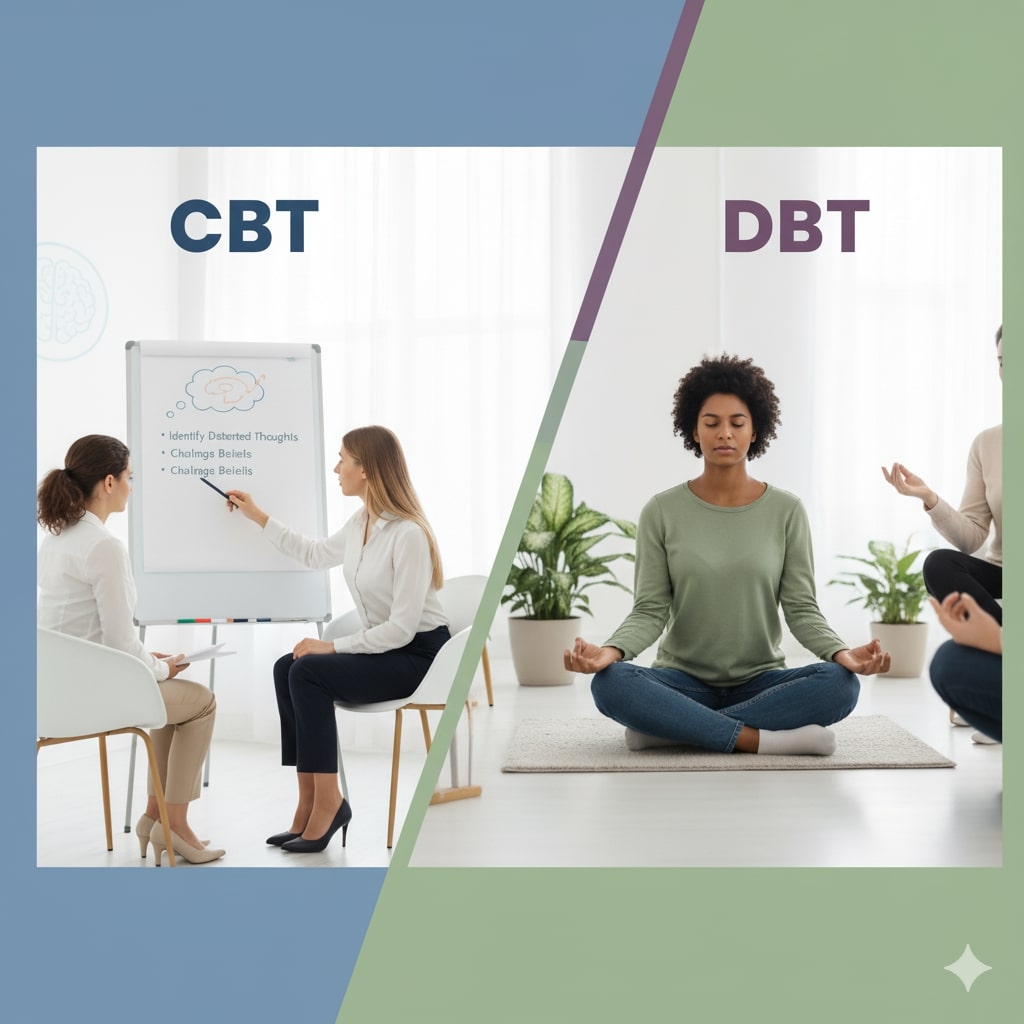
You may have heard of CBT (Cognitive Behavioral Therapy) and DBT (Dialectical Behavior Therapy). Both are proven approaches that can help you understand your thoughts and behaviors.
So, what’s the real difference between DBT and CBT? And how do you know which one might be the right fit for you or your loved one?
At Guided Grace Family & Youth Services, we understand that no two people heal in the same way. Our specialities include CBT, DBT, and other evidence-based approaches that support you.
This blog article will help explain the difference so you can feel more informed, supported, and ready to choose a path that fits you.
What Is Cognitive Behavioral Therapy (CBT)?
CBT is a structured and practical approach that helps you understand how your thoughts, feelings, and behaviors are connected. CBT aims to help you recognize negative thinking patterns and replace them with healthier, more helpful ones.
CBT is often used to treat:
- Depression
- Anxiety
- Stress
- Phobias
- Obsessive-compulsive behaviors
What Is Dialectical Behavior Therapy (DBT)?
DBT is a form of CBT that was developed to help people who feel overwhelmed by intense emotions or struggle with relationships.
While it shares some tools with CBT, DBT adds a strong focus on emotional regulation, distress tolerance, mindfulness, and interpersonal effectiveness.
DBT is especially helpful for:
- Borderline Personality Disorder
- Mood disorders
- PTSD
- People who experience self-harm or suicidal thoughts
- Emotion dysregulation
DBT teaches you how to accept yourself as you are while also working toward positive change.
4 Key Differences Between CBT and DBT
When comparing CBT to DBT, it helps to look at how each approach is designed to support you:
- CBT teaches you to challenge and reframe negative thinking, while DBT encourages you to notice your thoughts and feelings and accept them as they are without acting on them immediately.
- While CBT is usually shorter-term and highly structured, DBT tends to be longer-term and includes both individual therapy and group skills training.
- CBT includes some mindfulness techniques, but DBT uses mindfulness as a core practice to help you stay present and centered during emotional distress.
- CBT focuses on problem-solving and goal setting, whereas DBT balances acceptance with change. It helps you build tolerance for discomfort while working toward growth.
Trusted DBT and CBT Available in Saginaw, MI
At Guided Grace Family & Youth Services, we understand that therapy isn’t one-size-fits-all. That’s why we take the time to listen, learn, and create care plans that reflect your needs.
For some, that may mean working through specific thought patterns using CBT.
For others, it may include DBT or a thoughtful blend of both alongside other evidence-based approaches we offer. This flexible method allows us to meet you where you are, whether you’re seeking structure, emotional support, or a combination of the two.
Our team provides services such as individual counseling, marital support, youth services, and group therapy, all rooted in evidence-based practices that honor your unique story.
If you’re in or near Saginaw, MI, and looking for mental health support that puts you first, we’re here for you.
